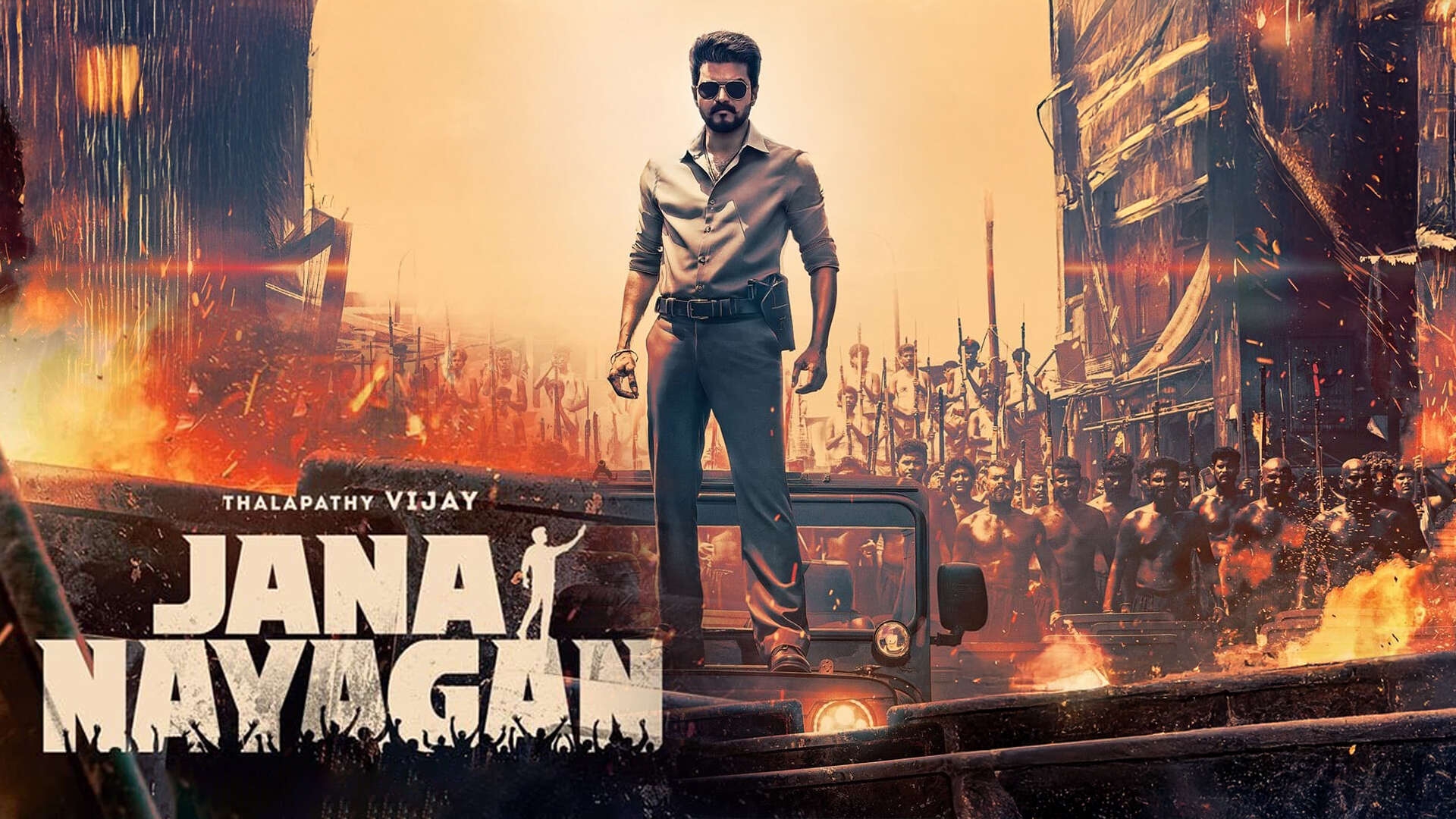
After a series of dramatic and unfortunate events, Jana Nayagan has finally made its way to theatres, marking Thalapathy Vijay's final appearance on the big screen as an actor. His 69th film is reportedly his last before fully dedicating himself to his political career, making this much more than just another release for his fans.
Jana Nayagan carries an emotional weight that few films ever do. Starring C. Joseph Vijay, Mamitha Baiju, Pooja Hegde, Bobby Deol, and others, the film was initially rumoured to be a remake of Balakrishna's Telugu hit Bhagavanth Kesari. That alone worried many fans, who questioned why Vijay's farewell film should be a remake. The trailer eventually confirmed those rumours, but it also became clear that this wasn't a scene-by-scene recreation. Instead, the makers opted for roughly a 60% adaptation while rewriting the remaining portions to better suit Tamil audiences, Vijay's screen persona, and more importantly, his current political image.
Even before its release, Jana Nayagan had one of the most turbulent journeys in recent memory. The film, originally scheduled for a January release, was delayed after its censor certificate reportedly got caught in political controversies involving the then-ruling party in Tamil Nadu. Fans closely followed every development, hoping for a release date, only to be met with disappointment after disappointment. Things took an even worse turn when the entire film was leaked online as the election season approached. Despite all this chaos, Vijay's fans never lost their enthusiasm and the celebrations inside theatres proved exactly that.
In fact, this might be one of the rare films in Indian cinema where even the censor certificate announcement generated massive fan celebrations. But nothing came close to the reaction for Vijay's title card. For the first and perhaps the last time, his introduction acknowledged him as the current Chief Minister of Tamil Nadu. That single moment was enough to turn the theatre into a celebration, making this screening feel far more emotional than a typical first-day-first-show experience.
Having already watched Bhagavanth Kesari, I found the opening portions of Jana Nayagan slightly difficult to absorb. The introduction, the first ten minutes, several shots, and even many dialogues felt almost identical to the original, carrying Balayya's signature style all over them. Thankfully, once Vijay settles into the role, his charisma, screen presence, and effortless swag completely transform the experience. He shoulders the film like only he can, delivering one final theatrical feast for his fans.
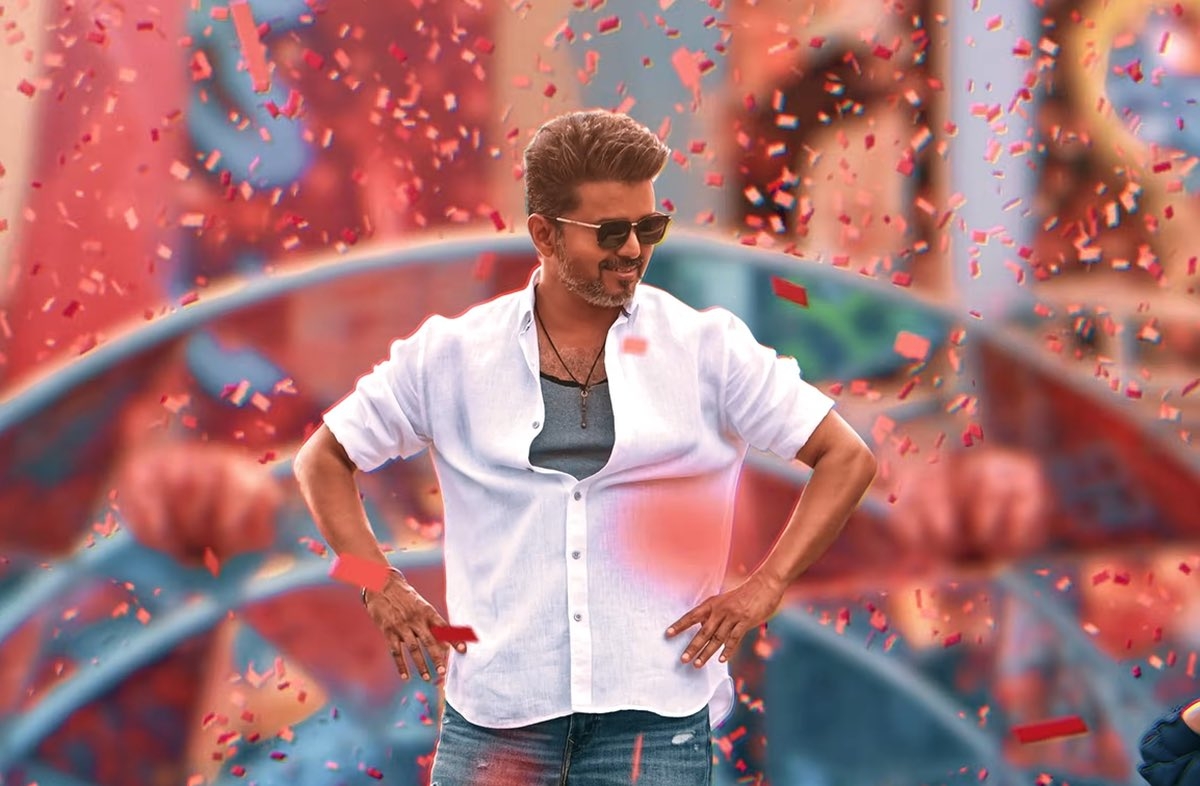
As expected from a Vijay entertainer, the film offers plenty of mass moments, stylish action sequences, energetic dance numbers, and peppy songs to keep audiences engaged. However, the second half takes a very different route from Bhagavanth Kesari, diving deep into political drama. Director H. Vinoth had earlier mentioned that these changes were necessary considering Vijay's current image, and the decision makes complete sense.
Watching these political scenes after Vijay's real-life electoral victory creates an entirely different experience. Several characters bear noticeable resemblance to real political figures, while many dialogues and situations subtly and sometimes directly comment on contemporary politics. What might have originally felt like political references now become whistle-worthy moments simply because reality has caught up with the film. It's difficult to judge these scenes purely as cinema when the audience inside the theatre is reacting to the man behind the character as much as the character itself.
Honestly, it was hard to watch Jana Nayagan with the mindset of a conventional critic. Every time Vijay appeared on screen, one thought kept lingering: What next? Watching one of Indian cinema's biggest entertainers bid farewell to acting—especially while still at the peak of his popularity—is difficult to process. Whether or not one agrees with his political decision, it undeniably adds an emotional layer to every scene. The best way to experience this film is not by overanalyzing it but by treating it as a celebration and a fitting farewell to a superstar. Anirudh literally had delivered a fan-service for this one with earth-shattering BGM, elevating Vijay's screen-presence to a whole new level.
Viewed purely as a film, Jana Nayagan is an interesting blend of Bhagavanth Kesari and H. Vinoth's political sensibilities, eventually culminating in an over-the-top action-heavy finale. Mamitha Baiju is easily one of the film's biggest strengths. As Raji, Vijay's stepdaughter, she delivers a confident performance and shines in an impressive action sequence alongside him. It's a dream role for the young actress, and she makes the most of it.
Bobby Deol is terrific as the menacing antagonist. His character starts off as a genuinely intimidating force, though the writing gradually pushes him into increasingly exaggerated territory with larger-than-life conflicts and RC wars, making the climax feel both ambitious and slightly excessive. It works in parts, but occasionally feels too overblown, even for a Vijay film.
Pooja Hegde has comparatively limited screen time, but she serves her purpose well. Her character isn't given much depth, though the film presents her with understated glamour, mostly through simple sarees and sleeveless blouses that complement her graceful screen presence.
The film is also packed with references that serve as tributes to Vijay's cinematic journey. His character is named Thalapathy Vetri Kondan, abbreviated as TVK, mirroring the name of his political party. One celebratory song cleverly incorporates musical references from several of Vijay's iconic films, with the actor dancing as though he's thanking his fans one final time. It feels less like a regular song sequence and more like a heartfelt farewell gift to the audience that has stood by him throughout his remarkable career.